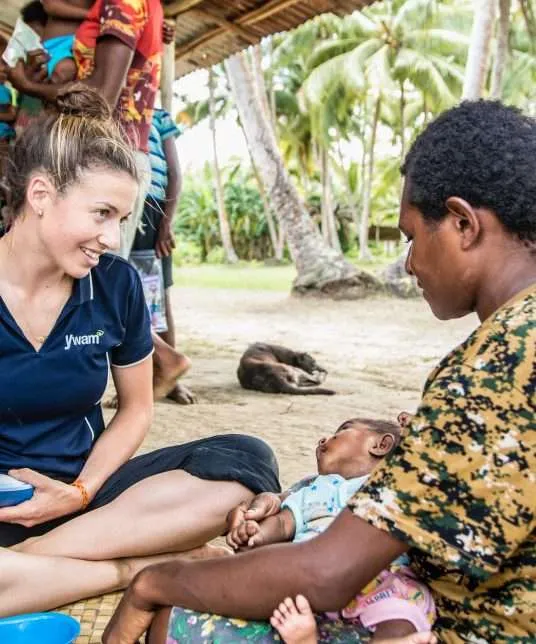
Global Health Gap Year

Our Global Health Gap Year calls those whose hearts beat to see communities thriving — physically, socially, emotionally, and spiritually.

The Global Health Gap Year is designed for both those who have experience in the health and development industry, and for those who simply have a heart to pursue missions in the healthcare context. The majority of our gap year students are 18–35 year olds. If you are over 35, please contact us — we would love to discuss your options!

Whatever your journey might be, this is not your average gap year experience. The Global Health Gap Year is about meeting real needs, bringing hope, and seeing your life transformed in the process.
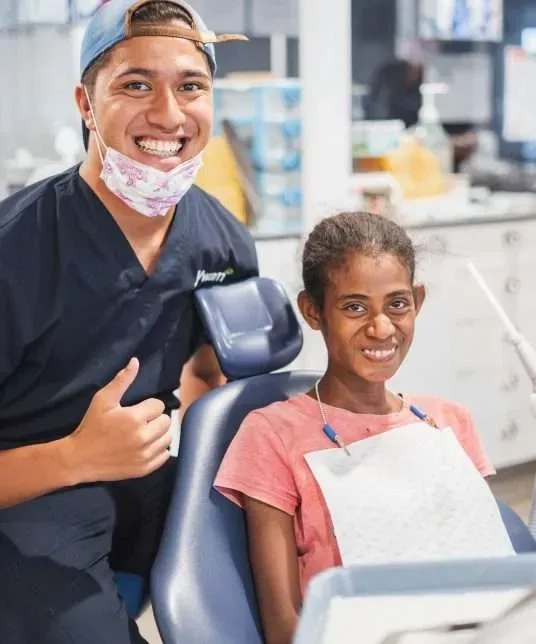

Step 1: Build your foundations

The first five months of your journey begin with a Discipleship Training School, either in Townsville, Australia or Port Moresby, Papua New Guinea.

During the first half of the course you will learn about a different topic each week from experienced speakers. Topics may include the nature and character of God, hearing God's voice, identity, relationships, biblical worldview, and living a missional life.

You will also be placed in a small group to help you further unpack your training with others each week, and matched with a mentor who catches up with you regularly to check in on your faith journey. The DTS includes 13 weeks of lectures and nine weeks of outreach.

DTS in Port Moresby

The Nations and Spheres DTS runs at our YWAM Medical Ships campus in Port Moresby, Papua New Guinea. It includes opportunities for discipleship, hands-on missions experience, and a chance to make history as we engage in Papua New Guinea.

The Nations & Spheres DTS has a particular focus on championing you to engage in different spheres of society, contributing toward the vision of building healthy lives, communities, and nations.

Find out more on our Port Moresby DTS page.

DTS in Townsville

Townsville is in tropical North Queensland near the top of Australia. Right on our coast is the Great Barrier Reef and Magnetic Island, and our campus sits in the city centre, close to the beach, cafes, and shops.

DTS options in Townsville include Challenge: High Ropes, Youth Ministries, Media & Radio, and Global Health. Find out more on our Townsville DTS page.

On completion of the DTS in Australia you will receive an 11290NAT Certificate III in Discipleship.

Step 2: Dive deep into healthcare missions

During the next 22 weeks of your gap year you will complete our Introduction to Global Health and Development School. You will be immersed in a powerful combination of essential basic healthcare knowledge and community development training, with a focus on preventing illness, promoting holistic wellbeing, and empowering communities to develop their strengths.

Your course will be at our Jetty Campus in Port Moresby, Papua New Guinea, where you will undergo 12 weeks of training and 10 weeks of outreach with hands-on experience in communities across Papua New Guinea.

On completion you will have attained a Certificate III in Basic Health Care — an Australian qualification for community health advocates — as well as multiple first aid units. The Certificate III in Basic Health Care is suitable for people wishing to pursue a career in health, providing a good base of knowledge for many healthcare industries including ambulance, nursing, security and Defence Force medical assistant.

Graduates of this course are well placed to step into a range of further training options, including our Purpose & Leadership Development.

HLT31220

Certificate III in Basic Health Care

HLTAID009

Provide Cardiopulmonary Resuscitation

HLTAID013

Provide First Aid in remote or isolated site

HLTAID014

Provide Advanced First Aid

Course Details

28 January – 13 December

Contact us to confirm the current intake dates for your year of entry.

Costs vary depending on where you decide to do the DTS portion of your gap year.

DTS in Townsville

$6,490 AUD course fee*
$1,000 – $1,800 AUD outreach travel expenses

DTS in Port Moresby

6,000 PGK course fee* – C nation price
12,800 PGK course fee* – B nation price
15,800 PGK course fee* – A nation price
+ outreach travel expenses, confirmed once outreach locations are decided

IGHD

6,000 PGK course fee* – C nation price
12,800 PGK course fee* – B nation price
15,800 PGK course fee* – A nation price
+ outreach travel expenses, confirmed once outreach locations are decided

Your course fee includes all the training you receive during the DTS and IGHD, and 19 weeks of outreach during your Global Health Gap Year. Training includes all of your meals, accommodation, laundry facilities, airport transfers, and use of our campus facilities including library and lecture rooms. Outreach includes all of your meals, accommodation, outreach shirt, visa (if required) and field supplies. Your outreach travel expenses cover variable costs such as flights, ferries and buses.

YWAM MS uses information supplied by the United Nations and other sources to rank countries in three categories (A, B, C) based on their per capita income. See the full list of nation financial categories.

*Does not include travel costs to and from Townsville or Papua New Guinea for the lecture portions of the schools, food or accommodation between courses, visa, health insurance and immunisations.

Austudy, Abstudy and Youth student allowance is available for Australian applicants.

Across the gap year you work toward an 11290NAT Certificate III in Discipleship (accredited only if completed in Australia), an HLT31220 Certificate III in Basic Health Care, and additional first aid units.

11290NAT Certificate III in Discipleship (accredited only if completed in Australia)

{{ u.code }}

{{ u.name }}

HLT31220 units

{{ u.code }}

{{ u.name }}

Additional first aid units

{{ u.code }}

{{ u.name }}

For recognition of prior learning or course credit, please see the Staff and Student Handbook.

Applicants need to have graduated high school or equivalent and have a sense of call to Christian missions. Students need to successfully complete the Discipleship Training School in order to continue on to the Introduction to Global Health and Development.

When overseas students apply, proficiency in English will be specifically assessed. Offers of placement in a course will include any applicable requirements for English language proficiency. Copies of documents, or telephone interviews, will be used to verify information provided by students on language proficiency. Bridging courses will be recommended where these are deemed necessary.

International students on student visas are required to maintain satisfactory academic progress and attendance to meet the requirements of the student visa.

YWAM Townsville is bound by the National Code of Practice for Registration Authorities and Providers of Education and Training to Overseas Students. The Department of Education, Employment and Workplace Relations regulates the education and training sector's involvement with overseas students studying in Australia on student visas, through the Education Services for Overseas Students legislative framework. This protects Australia's reputation for delivering quality education services and the interests of overseas students by setting minimum standards and providing tuition and financial assurance.

The legislation mandates a nationally consistent approach to registering education providers so that the quality of the tuition, and care of students, remains high. The professionalism and integrity of the industry is further strengthened by the ESOS legislation's interface with immigration law, which imposes visa-related reporting requirements on both students and providers. Read a simple explanation of the ESOS framework.

You may also like